
A static website is the structural growth inhibitor for entrepreneurs on the Costa Blanca in 2026; those who do not build modularly will eventually pay the premium for a full rebuild.
You build a scalable website by choosing a modular architecture (headless or component-based), fast cloud hosting, and an API-first approach. This allows you to add functionalities such as webshops, booking systems, or multi-language support without breaking the core of your site. By minimizing technical debt, your platform continues to perform under increasing visitor numbers and changing business goals.
Key Insights
Why Modular Architecture is the Standard in 2026
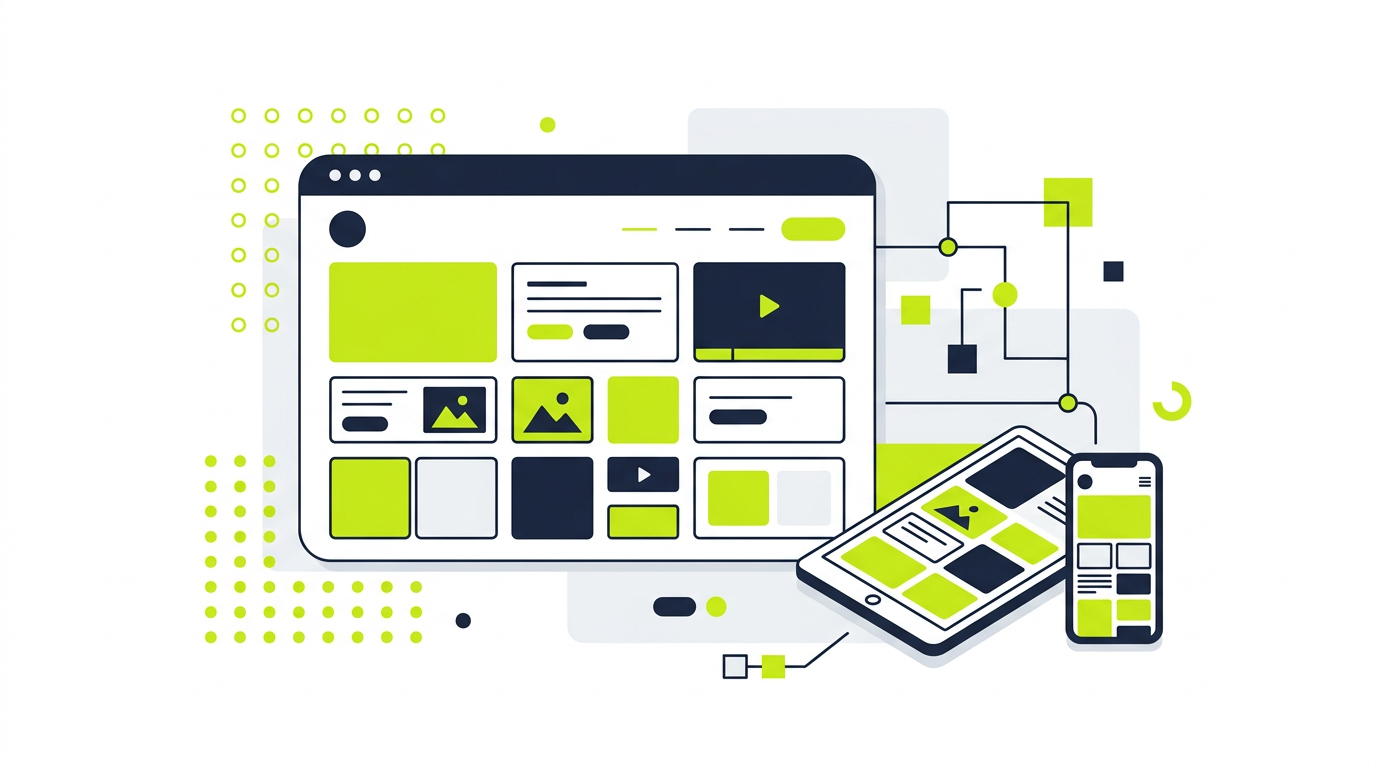
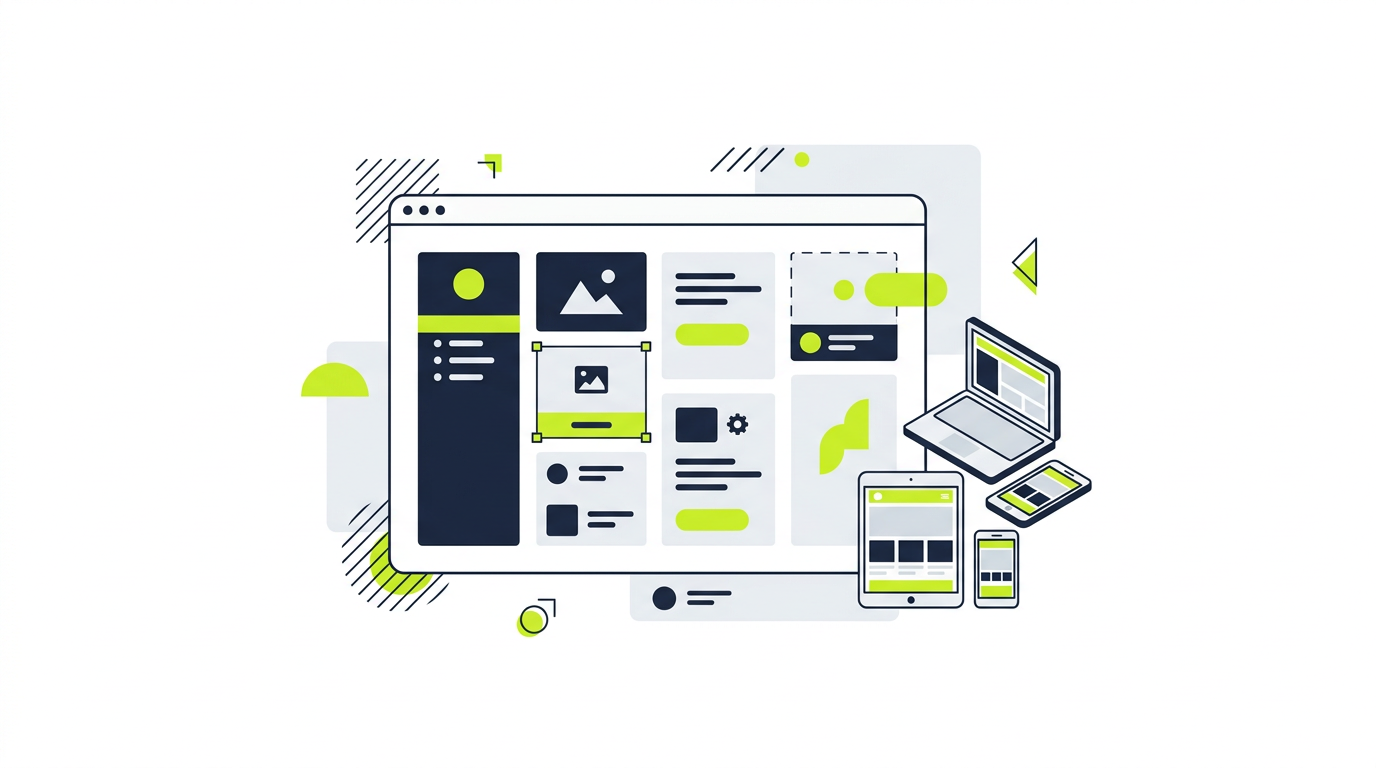
In 2026, the traditional 'monolithic' website—where design and database are inextricably linked—is officially obsolete. Companies that take scalability seriously now use component-based design. This means every part of your website, from the navigation bar to the product viewer, functions as an independent building block.
When we at Apex Digital start a project in Altea, for example, we don't begin with a fixed template. We build a library of components. The advantage? If you decide to add a real estate portal to your existing informative site in two years, you don't have to start over. You simply add the necessary components to the existing infrastructure.
Google's AI Overviews now favor websites with a clear, semantic structure. Modular websites make it easier for crawlers to understand the relationship between different content blocks, directly benefiting your AEO (Answer Engine Optimization).
The Shift to Headless CMS for International Growth
For entrepreneurs targeting both the local Spanish market and the Northern European market (Netherlands, Belgium, UK), a Headless CMS such as Contentful or Strapi is often the best choice. In a headless system, the 'back-end' (where you type the text) is decoupled from the 'front-end' (what the visitor sees).
This offers massive scalability benefits. You can use a single database of content for your website, a mobile app, and your social media feeds. In the tourism sector on the Costa Blanca, we see this as crucial: information about holiday rentals must be updated in real-time and synchronized everywhere, from your own site to local booking platforms.
How to Prevent Technical Debt During Rapid Growth
Technical debt occurs when you choose quick, cheap solutions that are maintenance-heavy in the long run. Think of excessive plugin use in WordPress or ignoring clean code standards.
In 2026, search engines penalize websites with a high 'Interaction to Next Paint' (INP) score. If your site is cluttered with old scripts, it becomes slow and you drop in the rankings. A scalable site therefore uses only necessary scripts and loads them asynchronously. We often advise our clients in the Valencia region to perform a 'code audit' at least every quarter to prevent the site from collapsing under its own weight.
API-First: Connections with CRM and Spanish Legislation
A website only truly grows with your business if it communicates with your other systems. For a company in Spain, this often means a connection with CRM systems (such as HubSpot or Salesforce) and accounting software that complies with Spanish IVA rules (for example, Holded or Quipu).
By adopting an API-first strategy from day one, you ensure that data flows fluently. When a customer in Javea fills out a form, this information should end up directly in your CRM and trigger a personalized email. In 2026, this is no longer a luxury, but a basic requirement for operational efficiency.
The 3-Layer Growth Framework by Apex Digital
To make scalability tangible, we at Apex Digital use the 3-Layer Growth Framework. No other agency uses this specific method for SMEs in Spain:
1. The Core Layer (Solid Foundation): Hosting, database, and security (SSL, GDPR compliance).
2. The Extension Layer (Growth Elements): Multi-language support, e-commerce modules, and portal functionalities.
3. The Intelligence Layer (Data & AI): Google Tag Manager, GA4, and AI-driven customer service tools.
This framework ensures you never pay for features you don't need yet, but the infrastructure is ready for the moment you decide to scale from one office in Denia to a franchise throughout Spain.
From the Field: What We See on the Costa Blanca
Recently, we worked for a mid-sized real estate group with offices in Moraira and Benissa. Their original website was built on an outdated version of WordPress with a heavy 'all-in-one' real estate theme. Every update broke the search function and the loading time during peak season (July-August), when search traffic from the Netherlands and the UK peaks, was dramatic.
We completely rebuilt the site following our scalable principles:
1. Migration to a lightweight framework: We replaced the heavy theme with a custom headless setup.
2. API Integration: Properties are now synced directly from their internal CRM (InmoPC) via an API, saving 15 manual labor hours per week.
3. Bilingual SEO: We implemented a scalable structure for ES/EN/NL/DE content, targeting specific search terms per nationality.
The Result: Within 12 weeks, organic visibility increased by 42%. More importantly, mobile loading time improved from 4.8 seconds to 1.1 seconds. During the Semana Santa peak, the server handled the 300% traffic increase effortlessly without extra costs, as the platform now scales elastically with demand via Google Cloud hosting.
Conclusion
A scalable website is not a static end product, but a living foundation prepared for the unknown challenges of tomorrow. Start mapping your technical debt today and choose a modular setup that doesn't block your future innovations.
Want to know if your current website can handle your company's growth? Request a free technical audit.
Related Articles from Apex Digital
About the Author
Apex Digital is a hands-on digital marketing agency based on the Costa Blanca, Spain, working with SMBs, hospitality, real estate and ecommerce brands across Alicante, Valencia and the wider region since 2020. We specialize in translating complex technical issues into measurable growth for entrepreneurs looking to conquer both the Spanish and international markets.
Our credentials:
Our editorial standard is strict: every article is reviewed by a human strategist, fact-checked, and updated as soon as Google's guidelines or Spanish regulations (such as LSSI-CE) change.
Need help applying this to your business? Book a free strategy call.
Free Website Audit Template
42-point checklist. Score your site.
Want us to implement this for you?
If you'd rather have experts handle your digital marketing strategy, we're here to help.
Book a Strategy Call